Dr. Vladimir Lapin

Dr. Vladimir Lapin 🌐∫⚙⬡∞

Senior Research Engineer · Climate & Geophysical Models · HPC · Predictions · AI Adoption

Senior Research Engineer at the Barcelona Supercomputing Center (BSC) working on Earth system models (EC-Earth4, OpenIFS, NEMO), co-leading Auto-EC-Earth4 ensemble workflows on MareNostrum 5, and leading AI adoption across the research group. For years, advancing the fidelity of Earth system models has been hindered by escalating code and physical complexity; my mission is leveraging AI and automated verification to make high-fidelity climate prediction affordable to science again.
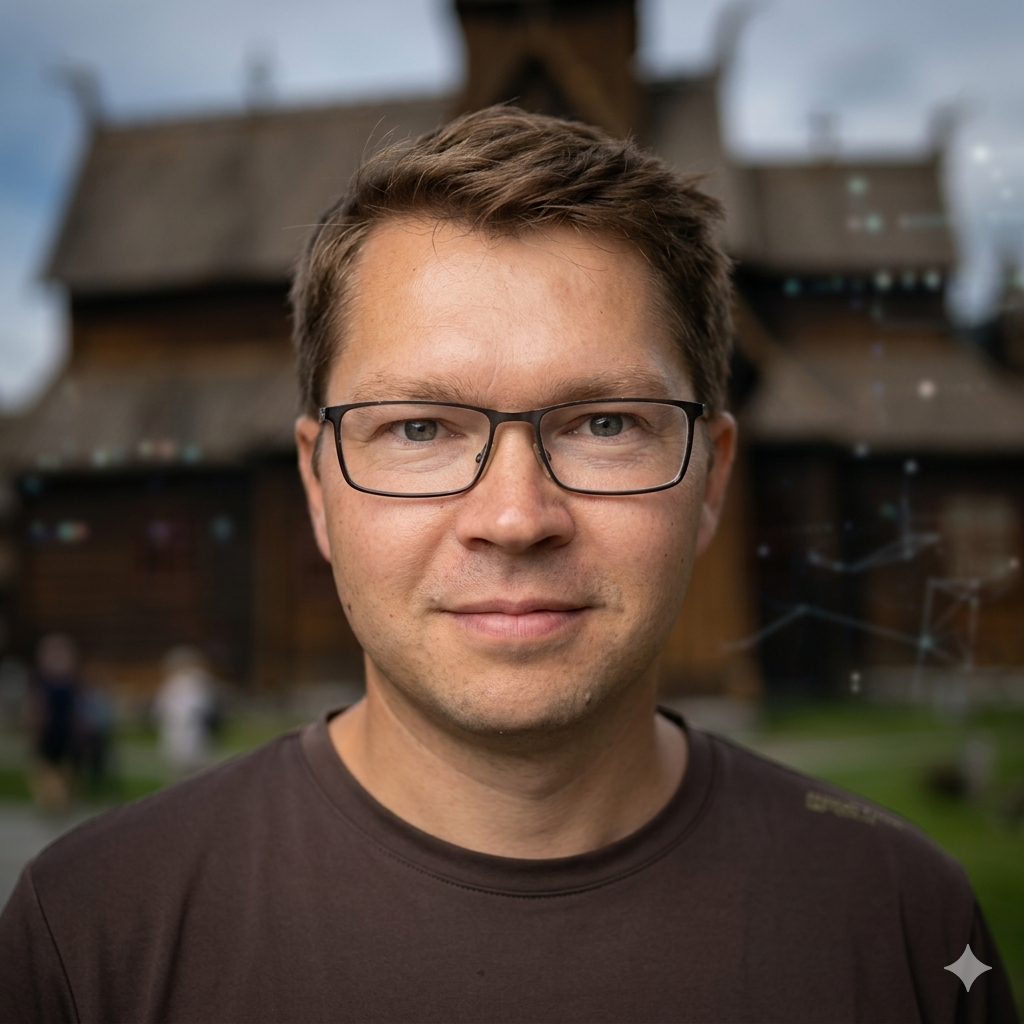
Current Focus: Tracer mass conservation & stochastic rounding in OpenIFS CY48R1.1, and preparing EC-Earth4 for CMIP7 on MareNostrum 5

Recent Research Log

Atmospheric Tracer Mass Conservation in OpenIFS: Single Precision Drift, Weather Divergence, and Stochastic Rounding

The first time you run OpenIFS in single precision, the global CO₂ mass budget will look like it has a severe leak. Here is what we found after tracking the diagnostics term-by-term, why >99.5% of the drift is chaotic weather, and how stochastic rounding fixed the real numerical error.

Eliminating the Conda Bottleneck on HPC: Fast Python & Climate Workflows with uv on Lustre

We’ve all watched a 64-node Slurm job stall for three minutes just importing xarray. Here is why standard Conda environments choke parallel filesystems like Lustre, and how pairing Astral uv with system LMOD modules eliminates job startup lag on MareNostrum 5.

Discovering Flowers: Why Multihead Coordinate Warps are a Breakthrough for Neural Fluid Solvers

When Till Muser shared Flowers—a neural PDE solver built entirely from multihead coordinate warps without Fourier multipliers or attention—it immediately resonated with our CFD background. Here is our experience discovering and benchmarking Flowers on the 2D Shallow Water Equations from PDEBench.

Running Decadal Climate Ensembles on Tier-0 HPC: Autosubmit DAGs, Lustre Striping, and Cluster Telemetry

Engineering lessons from managing multi-member Earth system model ensembles on MareNostrum 5: orchestrating DAGs with Autosubmit, tuning Lustre striping for NetCDF outputs, and NUMA-aware MPI rank placement.